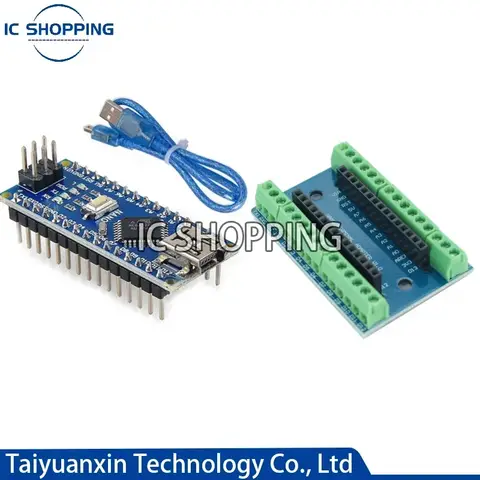
Which Microcontroller Board Is Best for a Beginner in Electronics?
Answer: For beginners, the Arduino Uno is the
best microcontroller board due to its simplicity, extensive community support, and wide range of tutorials. When I first started experimenting with electronics, I struggled to choose a
microcontroller board that was both powerful and easy to use. The Arduino Uno became my go-to choice because it offered a perfect balance between functionality and accessibility. It is based on the ATmega328P microcontroller, which is a type of
microcontroller integrated circuit that provides enough processing power for most beginner projects.
- Microcontroller
- A small computer on a single chip that can control devices and process inputs and outputs.
- Single Board Microcontroller
- A microcontroller that is embedded on a single board, often with additional components like memory and I/O ports.
- Start by purchasing an Arduino Uno board and a basic starter kit that includes sensors, LEDs, and jumper wires.
- Install the Arduino IDE (Integrated Development Environment) on your computer to write and upload code to the board.
- Follow a beginner-friendly tutorial, such as blinking an LED or reading a temperature sensor, to get familiar with the board's capabilities.
The Arduino Uno is also compatible with a wide range of
microcontroller kits and
development board microcontroller accessories, making it a versatile choice for learning and prototyping.
How Can I Choose the Right Microcontroller Board for a Specific Project?
Answer: To choose the right microcontroller board for a specific project, evaluate the required processing power, I/O capabilities, and available development tools. When I was working on a home automation project, I needed a microcontroller board that could handle multiple sensors and communicate via Wi-Fi. I compared several
microcontroller boards, including the ESP32, Raspberry Pi Pico, and
PIC microcontroller board, before making a decision.
| Board | Processor | Wi-Fi Support | GPIO Pins | Price (USD) |
| ESP32 | 32-bit | Yes | 34 | 6–10 |
| Raspberry Pi Pico | 32-bit | No | 40 | 4–6 |
| PIC Microcontroller Board | 8-bit | No | 18–38 | 5–15 |
The ESP32 was the best fit for my project because it offered built-in Wi-Fi and enough I/O pins to connect all the sensors. It is also a
microcontroller development board that supports a variety of programming languages, including C++ and MicroPython. If your project requires high-speed processing or advanced features like USB connectivity, consider boards like the
Intel microcontroller board or
STC microcontroller board, which are more powerful but also more complex to use.
What Are the Common Issues with Microcontroller Boards and How Can They Be Solved?
Answer: Common issues with microcontroller boards include power supply problems, incorrect code uploads, and hardware malfunctions, which can often be resolved with basic troubleshooting steps. During one of my projects, I encountered a problem where the microcontroller board would reset unexpectedly. After some investigation, I discovered that the issue was due to an unstable power supply. I fixed it by using a regulated 5V power source and adding a capacitor to smooth out voltage fluctuations.
- Microcontroller Unit (MCU)
- The central processing unit of a microcontroller board that executes instructions and controls hardware components.
- Microcontroller Evaluation Board
- A board designed to test and evaluate the performance of a microcontroller before final integration into a product.
- Check the power supply and ensure it is stable and within the board's voltage range.
- Verify that the code is correctly uploaded and that there are no syntax errors or memory overflows.
- Inspect the hardware connections and ensure that all components are properly soldered or connected.
If the issue persists, consult the board's datasheet or community forums for additional troubleshooting tips. Many microcontroller boards have active user communities that can provide support and guidance.
User Reviews and Experiences with Microcontroller Boards
Answer: Users generally rate microcontroller boards highly for their performance, ease of use, and flexibility, though some report issues with documentation and compatibility. I have used several microcontroller boards over the years, and the Arduino Uno and ESP32 are consistently praised for their reliability and ease of use. Users often highlight the availability of tutorials and libraries that simplify the development process. However, some users have reported that PIC microcontroller boards can be more challenging to work with due to less intuitive development tools and limited community support. On the other hand,
STC microcontroller boards are praised for their low cost and high performance in industrial applications. In my experience, the
best microcontroller for a project depends on the specific requirements and the user's level of expertise. For most hobbyists and educators, the Arduino Uno remains the top choice due to its simplicity and extensive resources.
Other Microcontroller-Related Topics of Interest
If you're interested in exploring more about microcontrollers, you might also want to look into
microcontroller chips,
microcontroller kits, and
microcontroller evaluation boards. These terms refer to different aspects of microcontroller technology and can help you find the right tools for your next project. For example,
microcontroller chips are the core components of any microcontroller board, while
microcontroller kits often include additional components like sensors, displays, and development tools. Microcontroller evaluation boards are ideal for testing and prototyping before final product integration. Whether you're a beginner or an experienced engineer, understanding the differences between these terms can help you make more informed decisions when selecting a microcontroller board for your project.